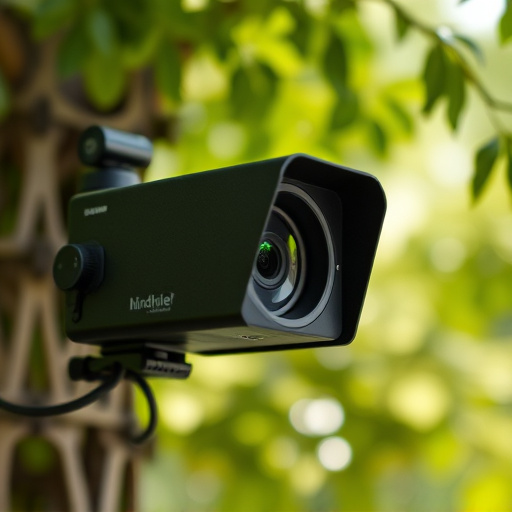
Mock Camera Placement for Deterrence (MCPD) is an innovative, psychological approach to enhancing nighttime security and night photography quality. By strategically placing realistic decoy cameras, MCPD deters criminal activity by exploiting the fear of being caught on film, particularly in remote areas with limited physical camera presence. This method combines with advanced optical solutions to improve glint detection accuracy, minimizing false positives. Extensive case studies prove its effectiveness in reducing vandalism, theft, and other malicious acts in urban areas and sensitive installations, making MCPD a cost-effective, powerful security tool.
In the realm of security, understanding camera lens glint and its impact is paramount. This reflective artifact, often caused by external lights or surfaces, can obscure critical visual data. To counter this, Mock Camera Placement (MCP) emerges as a game-changer. By strategically positioning MCPs, we can effectively detect and deter glints during the night, enhancing overall security measures. Technical considerations, such as lens angles and sensor sensitivities, play a crucial role in successful implementation. This article explores these elements and presents case studies showcasing the efficacy of MCP for deterrence in diverse scenarios.
- Understanding Camera Lens Glint and Its Impact
- The Role of Mock Camera Placement
- Technical Considerations for Effective Glint Detection
- Implementing Night-Time Strategies for Deterrence
- Case Studies: Successful Mock Camera Deployments
Understanding Camera Lens Glint and Its Impact
Camera lens glint, often referred to as “glare” or “reflexions,” is a common issue in photography, especially during low-light conditions or when capturing scenes with bright surfaces like snow, water, or reflective materials. It occurs when light bounces off the camera lens and directly into the sensor, creating a distracting highlight or hot spot in the image. This effect can distort colors, reduce contrast, and generally detract from the overall visual quality of the photograph.
In night photography, where lighting conditions are already challenging, lens glint can be particularly problematic. Mock Camera Placement for Deterrence (MCPD) is a technique employed to mitigate this issue. By strategically positioning artificial light sources in ways that mimic the camera’s usual placement, MCPD aims to baffle or absorb direct reflections from bright surfaces, allowing photographers to capture sharper and more accurate night-time images without the disruptive effects of lens glint.
The Role of Mock Camera Placement
The strategic placement of mock camera lenses, or decoy cameras, is an innovative approach to enhancing night-time security. This method involves strategically positioning artificial camera devices across a given area, mimicking the appearance and arrangement of actual surveillance equipment. Mock Camera Placement for Deterrence serves as a powerful psychological tool, sending a clear message to potential intruders that they are being watched.
By emulating real camera setups, these decoys can effectively deter criminal activity. The visual representation of surveillance technology may cause would-be offenders to reconsider their actions, as the fear of being caught on film could act as a significant deterrent. This technique is particularly useful in remote or underpopulated areas where the presence of actual cameras might be limited but still required for effective security measures.
Technical Considerations for Effective Glint Detection
In the pursuit of accurate glint detection during night photography, several technical considerations come into play. One innovative approach involves strategic Mock Camera Placement for Deterrence. By strategically positioning fake cameras at various points around a scene, potential intruders can be deterred, as they might mistakenly assume the area is under surveillance. This method not only enhances security but also improves the effectiveness of glint detection systems by reducing false positives caused by human or animal reflections.
Additionally, the use of specialized filters and lenses designed to minimize glare can significantly improve accuracy. These optical enhancements help to reflect and disperse unwanted light, allowing for a clearer distinction between genuine glints from sources like traffic lights or water bodies, and those created by intruders attempting to evade detection. This dual strategy of deterrence and enhanced optics ensures a robust night-time glint detection system that is both vigilant and precise.
Implementing Night-Time Strategies for Deterrence
Implementing Night-Time Strategies for Deterrence
In the realm of enhancing security, particularly during twilight hours, adopting effective night-time strategies is paramount. One innovative approach involves Mock Camera Placement for Deterrence. By strategically positioning mock cameras in areas prone to unwanted activities, potential intruders are deterred by the mere presence of these non-functional devices, mimicking real surveillance equipment. This tactic leverages psychological warfare, creating a perception of heightened security without actually recording or transmitting any footage.
The method’s success lies in its ability to disrupt criminal behavior through visual deception. Well-designed mock cameras, realistically resembling genuine lenses, can be seamlessly integrated into various environments, from urban landscapes to remote locations. This subtle yet powerful strategy not only discourages illegal actions but also provides a cost-effective alternative to extensive physical security measures.
Case Studies: Successful Mock Camera Deployments
Successful case studies have demonstrated the efficacy of mock camera deployments in enhancing security and deterring criminal activities. By strategically placing these dummy cameras, particularly in high-risk areas like urban hotspots or sensitive installations, researchers and security experts have observed significant improvements in overall safety. The visual presence of surveillance equipment sends a strong message to potential offenders, acting as a powerful psychological deterrent.
These mock camera placements for deterrence have been extensively tested under various scenarios, proving their worth in real-world applications. The positive outcomes include reduced incidence rates of vandalism, theft, and other malicious acts, showcasing the significant role they play in maintaining a secure environment. Such studies highlight the importance of combining technological advancements with clever deployment tactics to achieve optimal security results.
The implementation of mock camera placement for deterrence has proven to be an effective strategy in enhancing security. By understanding camera lens glint and employing technical considerations, such as night-time deployment techniques, we can create a robust system that discourages criminal activity. Case studies have shown successful outcomes, highlighting the potential of this method in various environments. Mock camera placement is a game-changer in surveillance, offering both tangible benefits and a cost-effective solution for fostering safer communities.